Mastering English Reading Skills
✅ Reviewed by James Okoro, Curriculum Writer — MA Applied Linguistics, for accuracy against current ELT practice and exam specifications.
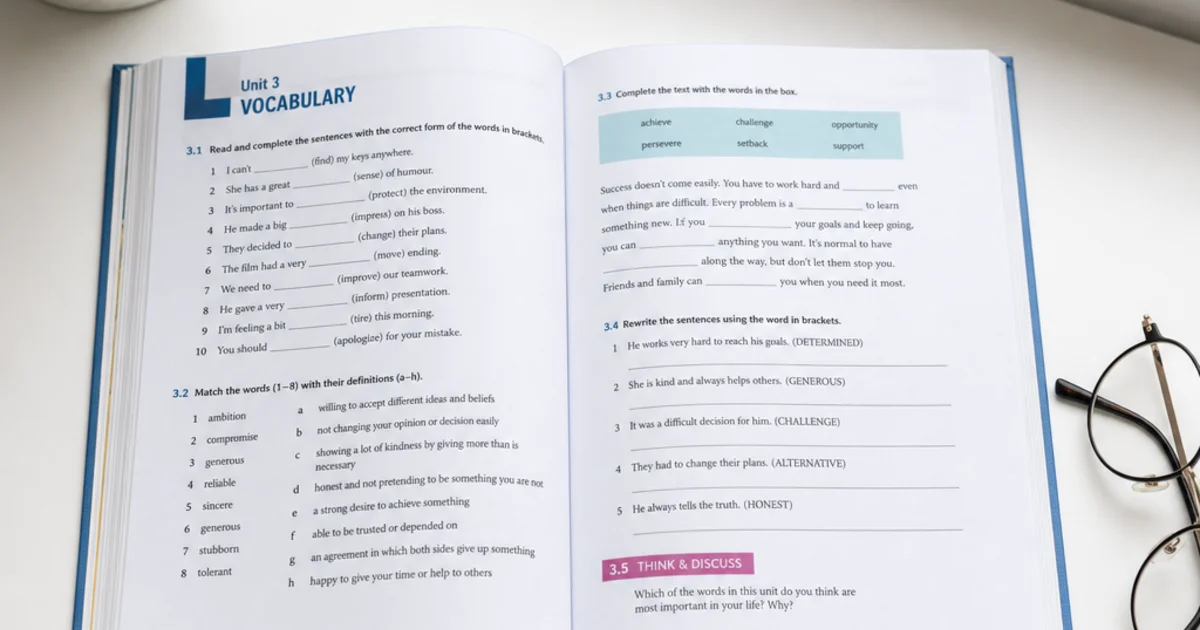
Skim and scan before you read closely
Skimming means reading quickly for the gist — headings, first and last sentences, key nouns. Scanning means searching for a specific fact — a name, a date, a number. Use both before a close read: skim to know what a text is about, scan to find the section you need, then read that part carefully. This is exactly the skill IELTS reading tasks reward.
Guessing meaning from context
You will always meet words you do not know. Stopping at every unknown word kills momentum. Instead, use the surrounding sentences: is the word positive or negative? Is it a thing or an action? Does an example or contrast nearby explain it? Guess, keep reading, and check the dictionary only if the word keeps appearing.
Extensive reading for fluency
Extensive reading is reading a lot of easy, enjoyable material for overall fluency; intensive reading is studying a short text closely for detail. You need both. Extensive reading builds speed and vocabulary naturally; graded readers and simplified news like the VOA Learning English materials are ideal for it.
Reading builds vocabulary painlessly
Each time you meet a word in context, your grasp of it deepens — its meaning, its collocations, its register. Words met in reading stick better than words memorised from lists because they come with the context that makes them usable. Keep a simple notebook of words you have met more than once.
Reading focus and stamina
Long texts test concentration. Break them into sections, pause to summarise each in your own words, and resist the urge to check your phone every paragraph. Reading stamina, like physical stamina, grows with regular practice at increasing lengths.
Intensive vs extensive reading: two complementary modes
Reading practice falls into two modes, and both are essential. Intensive reading involves short, challenging texts studied in depth: you analyse vocabulary, grammar structures, and nuance, often with a dictionary and teacher guidance. This is where you build precision and tackle difficult material. Extensive reading involves longer, easier texts read for pleasure and general comprehension, with minimal dictionary use. This is where you build fluency, speed, and a natural feel for the language.
Most learners do plenty of intensive reading (textbook passages, exam practice) and almost no extensive reading, which is a missed opportunity. Extensive reading builds vocabulary through repeated contextual exposure, internalises grammar through pattern recognition, and develops reading speed — all skills that intensive study alone cannot produce. Find graded readers or simplified novels at your level and read for enjoyment, not analysis. If you can read 30 minutes of extensive material daily alongside your intensive study, your overall reading ability will improve faster than through either approach alone.
Building vocabulary through reading context
Reading is the single most effective way to build a large English vocabulary, far more efficient than studying word lists. When you encounter a new word in context, your brain connects it to a situation, a sentence structure, and surrounding words, creating multiple memory anchors. A word learned from a list has one anchor (the translation); a word learned from a story has many (the character who used it, the scene, the emotion).
The practical approach is to read widely and resist the urge to look up every unknown word. If you understand the overall meaning of a sentence, skip the dictionary and keep reading. The word will appear again in other contexts, and each appearance deepens your understanding. Look up only words that appear repeatedly or that block your comprehension of a key point. Keep a small notebook of words you have inferred from context and later confirmed with a dictionary — these are the ones you will retain best, because you earned them through engagement rather than passive memorisation.
Lesson summary
- Skimming captures the gist quickly; scanning locates specific information; both are essential exam skills.
- Combine intensive reading (deep analysis of short texts) with extensive reading (longer, easier texts for fluency).
- Build vocabulary through contextual reading rather than word lists; inferred words are retained best.
- Practise inference by reading past unfamiliar words and using surrounding context to guess meaning.
- Choose material at 95-98 percent comprehension for extensive reading to build speed and enjoyment.
Learner questions
Should I look up every new word when reading?
What should I read to improve my English?
Should I read aloud or silently to practise reading?
How do I choose reading material at the right level?
Further reading
Guidance is drawn from the authoritative ELT sources above. Examples and explanations are provided for educational purposes; always check current exam specifications on the official test websites.