Mastering ESL Teaching
✅ Reviewed by James Okoro, Curriculum Writer — MA Applied Linguistics, for accuracy against current ELT practice and exam specifications.
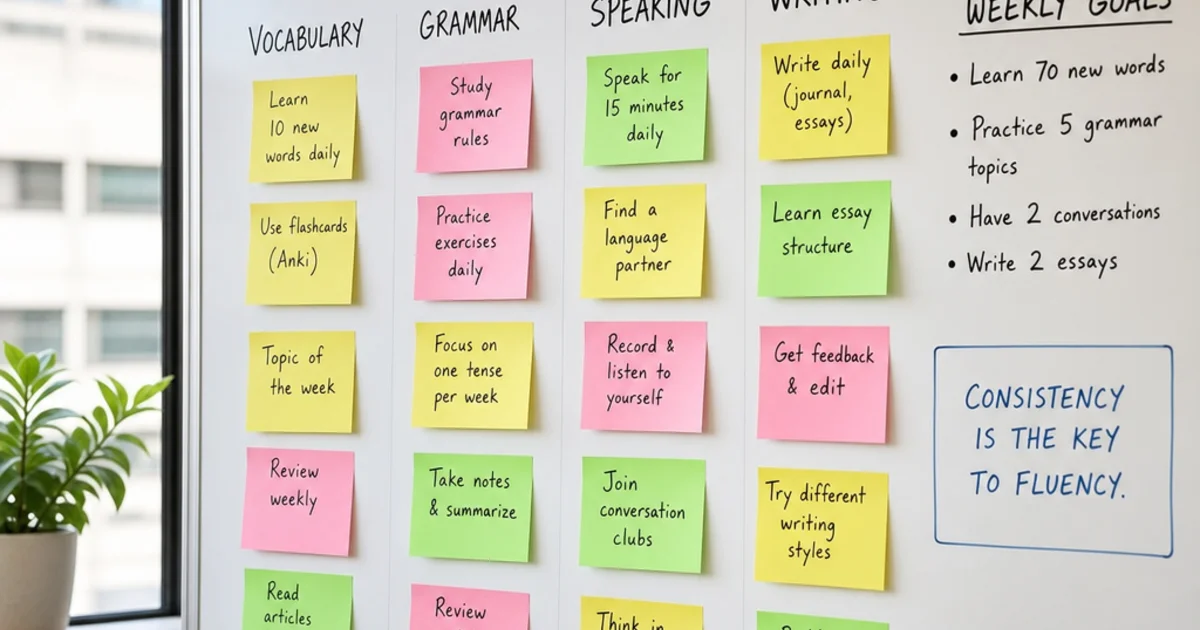
Staging a lesson: presentation, practice, production
A durable lesson shape is PPP: present new language in context, practise it in controlled exercises, then let students produce it freely. Another is the task-based shape: students attempt a real task, notice their gaps, then refine. Both work; the key is a clear arc where students move from receiving to using language. The Cambridge English — Learning English outlines these frameworks for teachers.
Giving instructions students follow
Most classroom confusion comes from unclear instructions, not from the task itself. Give instructions before, not after, you hand out materials. Keep them short, sequence them, and check with a concept question: ‘What will you do first?’ Demonstrate the task with an example before students start.
Error correction that helps
Correcting every error kills fluency and confidence. Choose what to correct based on the lesson’s aim: during fluency activities, note errors for delayed feedback; during accuracy practice, correct the target form. Self-correction is powerful — repeat the error as a question (‘She go?’) and let the student fix it. Peer correction works for older learners when the atmosphere is supportive.
A learner-centred classroom
The teacher should talk less than the students. Maximise student talking time through pair and group work, open questions, and information-gap activities. Your job is to set up tasks that force language use, then monitor and support — not to perform. A class where the teacher talks for 70% of the time learns little.
Mixed levels in one class
Most classes have mixed levels. Differentiate by task (same topic, different difficulty), by support (more scaffolding for weaker students), and by grouping (pair stronger with weaker for mutual benefit). Open-ended tasks let each student produce at their own level — a question like ‘Tell me about your weekend’ works for everyone.
Differentiating instruction for mixed-ability classes
Real classrooms are rarely homogeneous. Even in a class labelled “intermediate,” some students breeze through a reading while others struggle with the same text. Effective teachers plan for this range rather than pretending it does not exist. Differentiation can take several forms: providing the same task at different difficulty levels, offering a choice of response formats (write, draw, discuss), or grouping students strategically so stronger learners support weaker ones while consolidating their own understanding.
A practical approach is the “tiered task” model. Set a single learning objective — for example, “students will describe a past holiday” — but offer three tiers of support. Tier one learners get sentence starters and a vocabulary bank. Tier two learners get the topic and a model paragraph to reference. Tier three learners get only the prompt and are challenged to produce a fuller, more detailed narrative. Everyone works on the same skill, but the scaffolding matches their readiness. This approach keeps the whole class engaged and prevents the common problem of fast finishers growing bored while struggling learners fall behind.
Giving feedback that students actually use
Feedback only improves learning if the student engages with it, and many traditional feedback practices fail this test. Scrawling “good” or circling every error in red ink tells the student little about how to improve and can feel discouraging. Effective feedback is specific, timely, and actionable. Instead of “work on grammar,” write “check your subject-verb agreement in paragraph two — you wrote ‘the students was’ instead of ‘the students were.’” The student knows exactly what to fix and why.
Timing matters too. Feedback given immediately after a task, while the work is still fresh, is far more likely to be applied than feedback returned a week later. Consider the ratio of correction to encouragement: research suggests that focusing on one or two priority error types per assignment, rather than flagging every single mistake, produces better long-term improvement because the student is not overwhelmed. And wherever possible, give students a chance to revise based on the feedback — the act of correcting their own errors, guided by specific comments, is where the deepest learning happens.
Lesson summary
- Lesson planning balances presentation, controlled practice, and free production in a clear arc.
- Differentiate instruction for mixed-ability classes through tiered tasks and strategic grouping.
- Feedback should be specific, timely, and focused on one or two priority areas, not every error.
- Give students opportunities to revise based on feedback; correction drives deeper learning than passive receipt.
- Comprehensible input and a supportive, low-anxiety classroom accelerate acquisition.
Learner questions
Do I need a CELTA or TEFL certificate to teach ESL?
How much should the teacher talk in a lesson?
How large can an ESL class be before quality suffers?
Should I correct every error a student makes?
Further reading
Guidance is drawn from the authoritative ELT sources above. Examples and explanations are provided for educational purposes; always check current exam specifications on the official test websites.